Modeling / Print p. 058 / Studio Envy / Debut campaign
Rachel Love Takes the Centerfold
Black lace, champagne fur, oxblood satin, and a model who insists every look have a job before it earns a page.
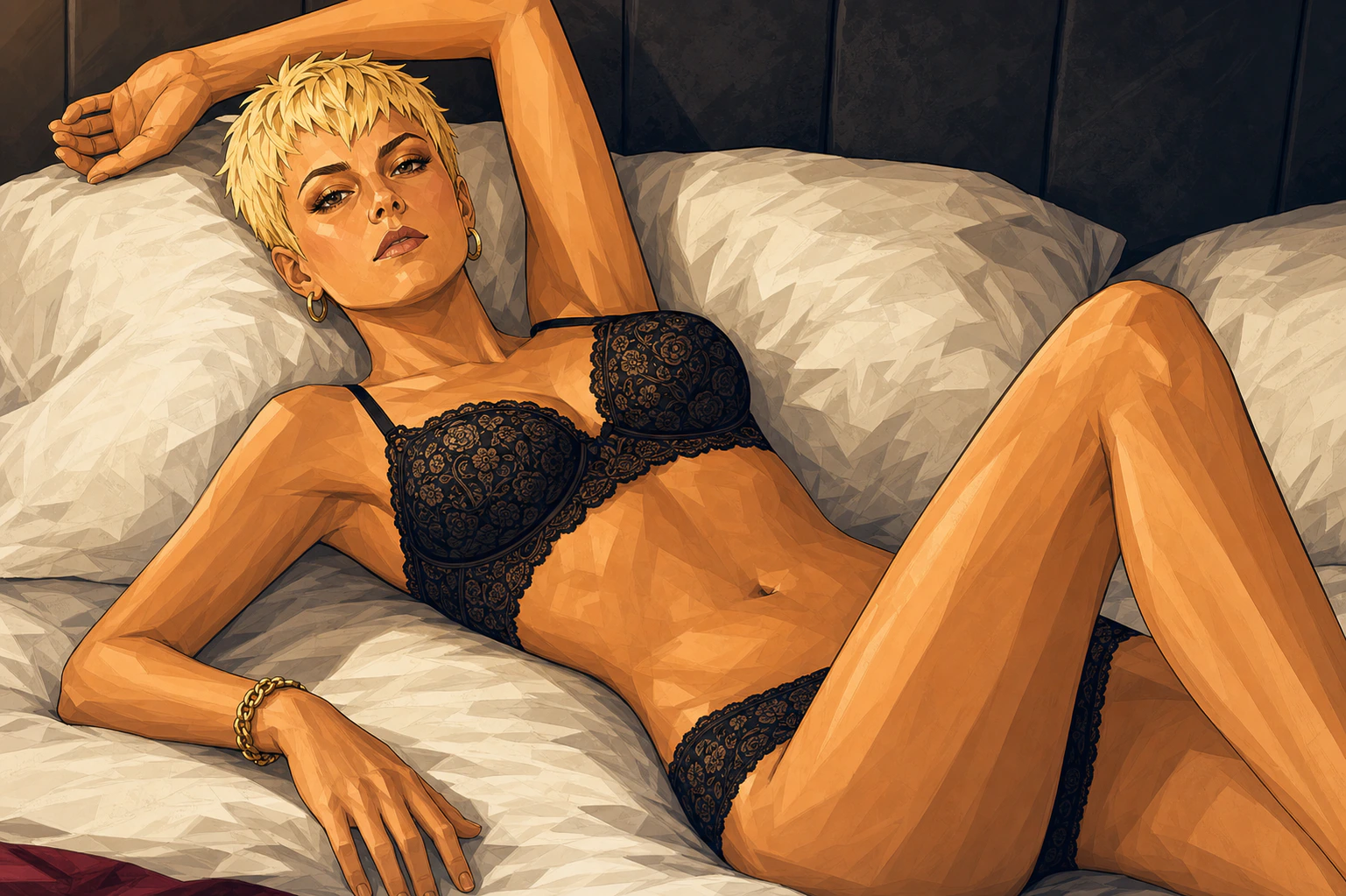
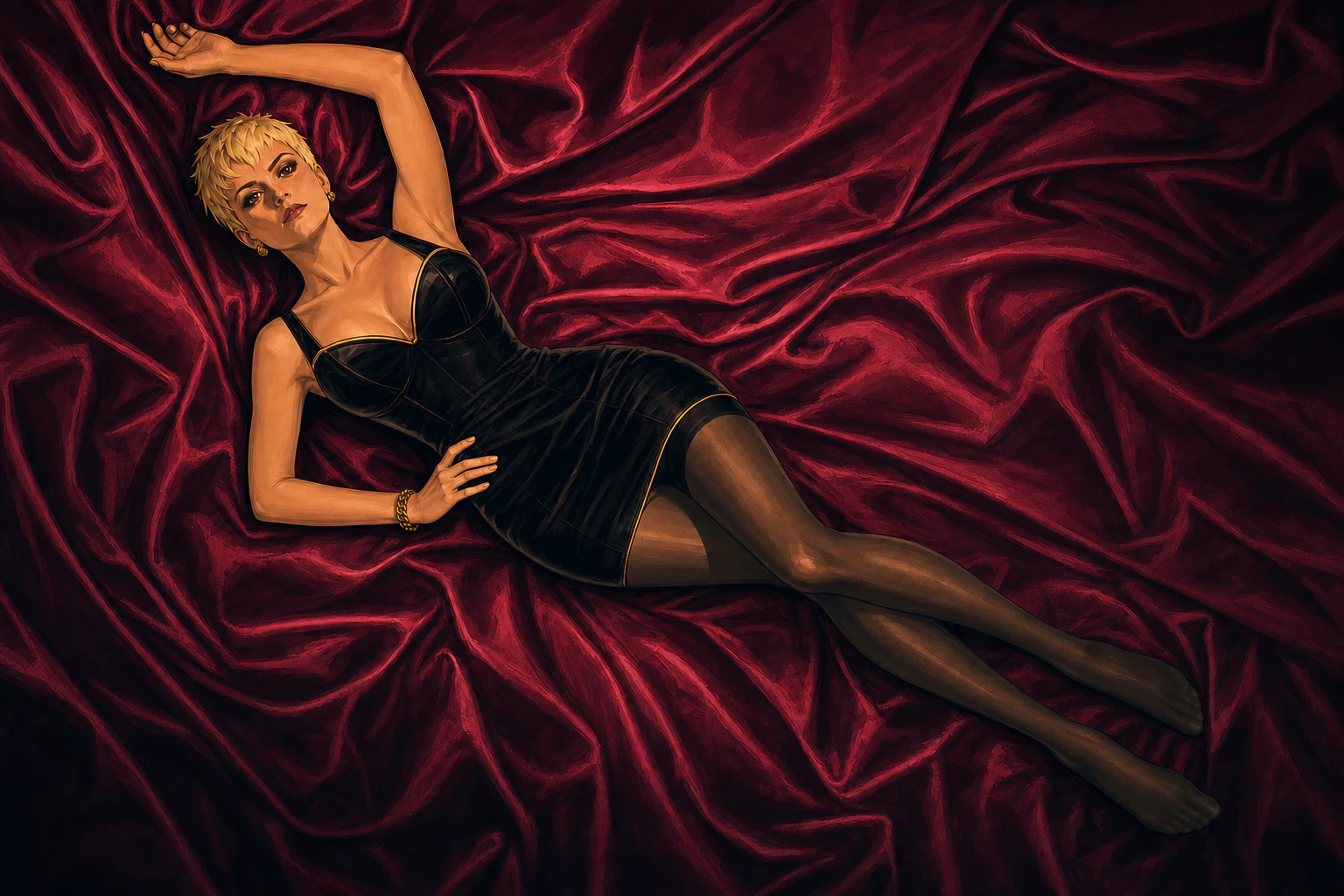
Rachel Love's first credited Envy modeling feature was planned as a sequence rather than a pile of alternate covers. The opening frame uses black lace against ivory bedding. The second moves into the Ruby Room with champagne fur and oxblood. The overhead image changes the angle and strips the set back to black satin and a single field of color.
Those studio photographs establish the campaign's formal side: direct eye contact, controlled poses, and very little decoration. Rachel's short hair, the black-and-red palette, and the repeated fur give the pictures continuity without putting her in the same look six times.
Accidents do not require this many fittings.
The wardrobe record is unusually specific because the credits are part of the story. Sessanta Nove supplies the full look. Le Chien appears in the watch, fragrance, and cuff details. Didier Sachs eyewear is used for the rooftop sequence. Every borrowed item was logged against the frame in which it appears.
The rooftop pool image changes the issue. Rachel wears ivory and coral beside bright blue water with Los Santos behind her. There is no heavy set and no attempt to turn daylight into another nightclub. The pose is relaxed, the city is recognizable, and Rachel looks like a person enjoying a place rather than a model demonstrating that she can afford it.
That is why the photograph became both the cover and the center spread. It survives a wide crop, keeps Rachel's face legible, and carries the location without losing the subject. More importantly, it connects to the personal details elsewhere in the issue: the marina, the Seasharks, the preference for being outside when the weather allows it.
The final studio frames add movement and production context. A ruby sequined look gives the campaign one standing image; the director's-chair portrait places Rachel on the working side of the set. Together, the sequence presents her as a model without erasing the producer credit that made the feature possible.
Rachel is not the most experienced model Envy could have booked. That is part of the point. Issue 07 records a debut with a clear idea behind it, a subject who knows what she wants from the pictures, and one image strong enough to set the standard for whatever follows.
The standard is not merely that every picture resemble the same woman. The palette repeats without flattening the settings; the clothes are credited to specific frames; the outdoor sequence still belongs to the studio work; and the cover tells the truth about where the photograph was made. Continuity is visible because the production decisions are visible.
Future Envy issues will be measured against the rooftop frame for exactly that reason. It is glamorous without becoming generic, located without turning the skyline into wallpaper, and relaxed without pretending the camera happened to be there. The photograph works because the construction is controlled and the person inside it still appears to have a life beyond the assignment.
Source record / First-party company file with a disputed municipal account
What the issue can prove.
Issue 07 is the approved Envy flagship. Career, production, asset, and campaign claims come from Love Media and Palisade records. The Finance Department dispute remains Rachel Love's documented account unless an independent public record confirms it.- Envy Issue 07 / Love Sells Flagship issue / Commissioned issue package, production credits, image sequence, and first-party subject record.
- Palisade Pictures Studio record / First-party studio description and the production context for Rachel's screen test.
- Rachel Love / Envy Subject dossier / First-party public profile. Municipal allegations are attributed to Rachel rather than presented as independently proven.