Crime / Davis
Two rifles sat beneath Noah Gutierrez's counter. Five months later, he took a murder plea.
LSSD named Gutierrez as the owner of Brouge 24/7 during January drug and gun raids. In a separate June case, he pleaded guilty as an accessory to murder. The public record does not connect the two cases.
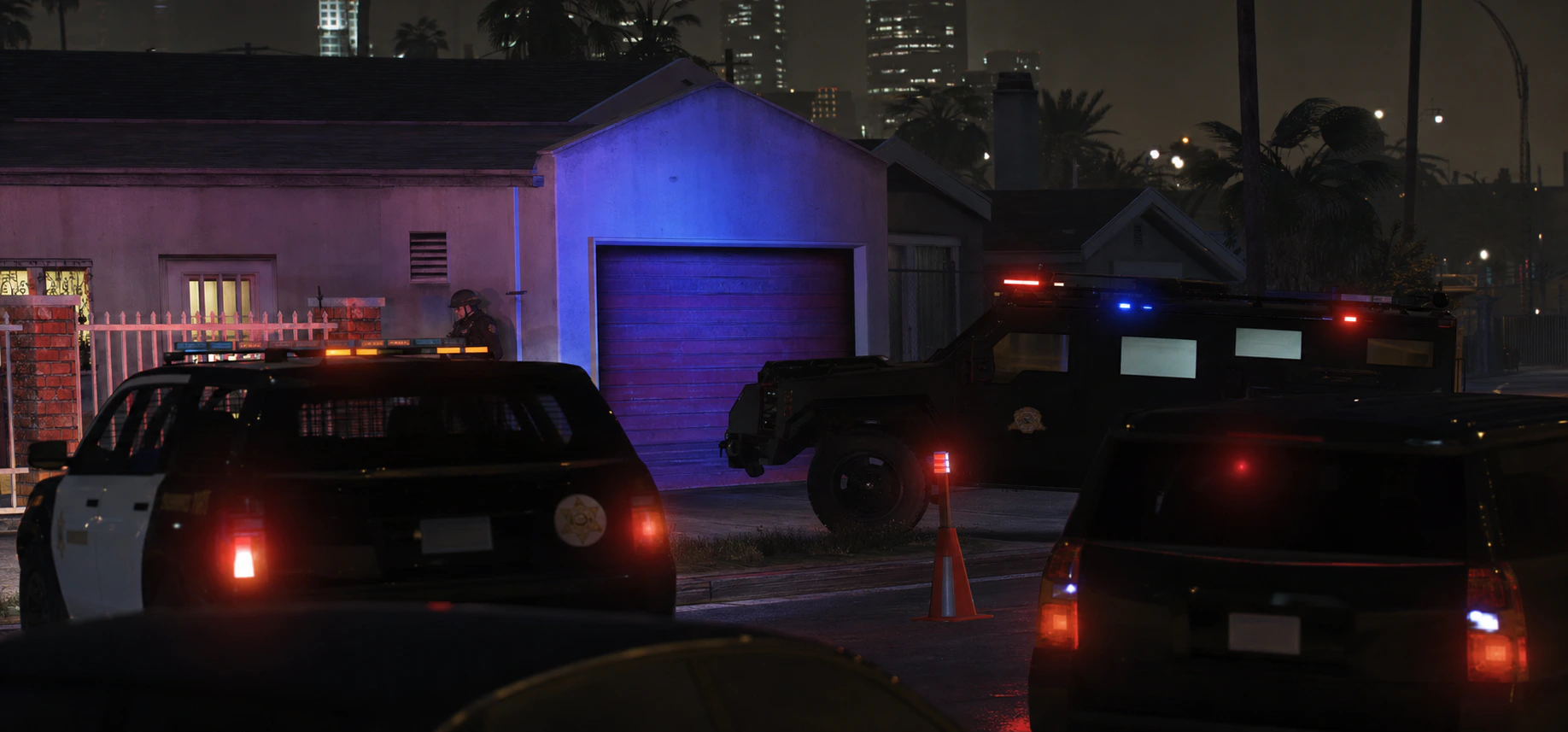
The rifles were under the counter.
Sheriff's deputies say they found them at Brouge 24/7, the Davis convenience store they identified as belonging to Noah Gutierrez. Not in a locked bedroom. Not inside an unnamed stash house. Two rifles sat beneath the same counter where the store sold cigarettes, drinks and groceries to the neighborhood.
The January operation reached far beyond the register. The Los Santos County Sheriff's Department said it served five warrants, arrested three people, seized at least seven automatic weapons and struck an alleged drug-trafficking network spread across Davis and Legion Square. Its public evidence count then contradicted its own headline.
The headline announced 22 firearms and a half-kilo of narcotics. The evidence paragraph listed 21 firearms and approximately 650 grams. The department claimed one more gun and 150 fewer grams in the line written to travel furthest.
The raid began two months earlier on Brouge Avenue. Narcotics detectives and Operation Safe Streets investigators identified four properties connected to Gutierrez and an apartment in the Charleston public-housing complex that they suspected was being used as a trap house. Detectives from Narcotics and gang units went in with the Special Enforcement Bureau, crime-impact teams, canine units and state parole officers. All five warrants were served at once, before people or evidence could move between addresses.
The department named Gutierrez and Derek Carrillo as suspected participants in a larger criminal network operating as a street gang. Carrillo was arrested at a residence during the searches. Gutierrez was arrested the next day in Hawick on allegations including drug trafficking and aggravated firearm possession. Genesis Turcios was arrested during the operation after deputies said she had a pistol. Additional affiliates and conspiracy charges were described as pending but left unnamed.
The January release stops there. It supplies arrest allegations, not a docket, plea or verdict. No public charging disposition appears in the available Brouge file, and no current ownership record establishes whether Gutierrez still owns the store. Carrillo and Turcios remain accused names in an agency release until their court records establish what prosecutors filed and proved.
Gutierrez does appear in a later court file. On June 5, deputies detained him near Sustancia Road and El Burro Boulevard after one deputy was killed, Deputy Annabelle Jones was injured and Cameron Ortega's buried body was recovered near the scene. That prosecution is separate from the Brouge warrants.
The arrest report says officers recovered a Glock from Gutierrez's waistband and ammunition from his person. Field and laboratory gunshot-residue tests were negative. The later court filing attributed ballistics from Ortega's body to the recovered pistol and said a friction-ridge examination matched Gutierrez to the weapon. The negative residue result and the later laboratory claims belong in the same account; neither erases the other.
Gutierrez ultimately pleaded guilty to second-degree murder as an accessory, possession of a firearm by a convicted felon, unlawful possession of ammunition and tampering with evidence. Prosecutors dismissed the original accomplice-murder count. Court Commissioner Cornelius Freeman accepted the agreement and ordered Gutierrez released after a recommended sentence of nine months and 16 days was satisfied by time served.
The June plea changes Gutierrez's public record. It does not connect the homicide to the store, the rifles or the alleged trafficking network. The January release names one investigation. The June docket describes another. The cases remain separate unless a charging document, witness account, ballistic record or property receipt connects them.
The rifles remain the January story's clearest address-specific fact. Everything else in the evidence pile is distributed across five warrant locations. LSSD did not say which address held the narcotics, where the seven automatic weapons were recovered or what investigators found inside the Charleston apartment. Its property receipt can assign each weapon and bag to a door. The department has not published it.
That receipt must also account for gun No. 22. The public release gives no classification dispute or corrected inventory; it simply gives two totals. The narcotics count is equally plain: a half-kilo is 500 grams, while the evidence paragraph reports 650. LSSD made a major seizure and then described it carelessly.
Four records can close the January case: the charging docket, the Brouge 24/7 ownership file, the LSSD property receipt and a response from Gutierrez or his counsel. Together they would establish what prosecutors filed, who controlled the store, where each item was seized and how Gutierrez answers the allegations attached to his business.
Five warrants, seven automatic weapons and two rifles beneath a neighborhood register were enough to justify the January headline. Gutierrez's later murder plea is enough to scrutinize the owner. The public record supports those statements separately. What, if anything, did prosecutors prove about the rifles under Noah Gutierrez's counter?