Homicide / Harmony
The robbery failed. A customer died. Deputies found the gun at the suspect's house.
A Route 68 convenience-store shooting led detectives to Mickey Pope's residence, where deputies reported the murder weapon, another gun, 150 rounds and 60 grams of methamphetamine.
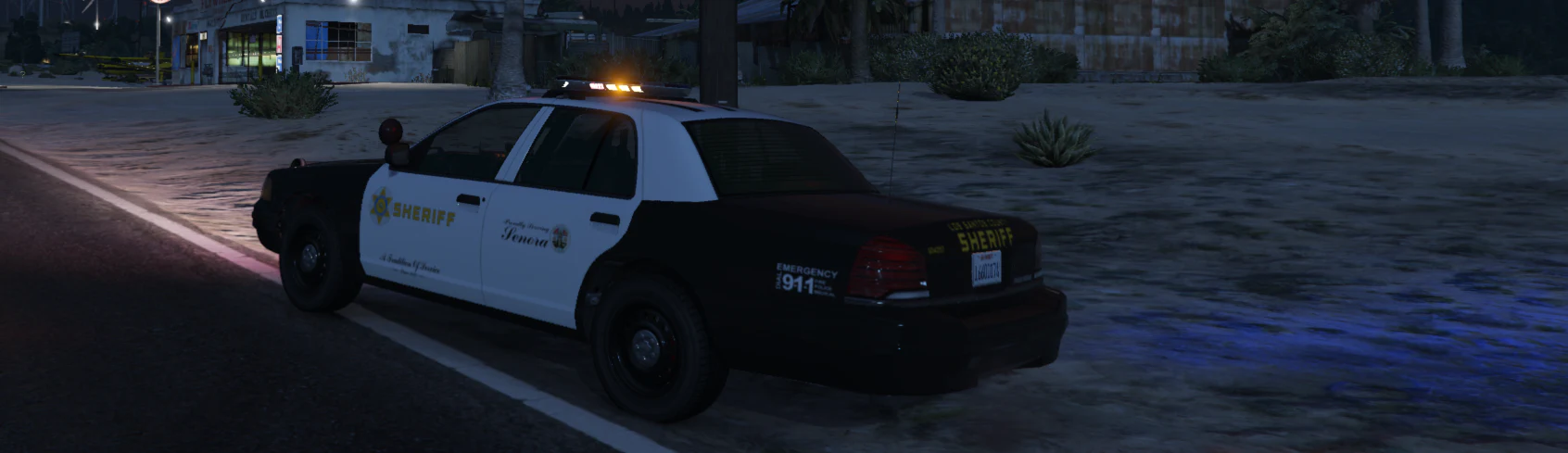
A robbery attempt at a Route 68 convenience store ended with one customer dead and the suspected murder weapon carried back to a residence on Great Ocean Highway, according to the Los Santos County Sheriff's Department.
The call reached the Sheriff's Communication Center at about 12:45 p.m. on October 29. Senora Station deputies and crime-impact investigators responded to the Harmony 24/7. The victim, whose name remains withheld in the public release, was pronounced dead at the store by Los Santos Fire Department personnel.
Investigators said the shooting immediately followed an attempt to rob the victim inside the business. The department has not published what property was demanded, whether anything was taken, how many shots were fired or whether customers and employees witnessed the confrontation.
Homicide investigators identified Mickey Pope as a suspect and arrested him at a residence near 400 Great Ocean Highway. He was charged with first-degree murder and possession of a prohibited firearm. Those charges are accusations. The release provides no later plea, dismissal or verdict.
A Major Crimes Bureau search of the residence reportedly recovered two firearms. Deputies said one was later confirmed as the gun used in the 24/7 shooting. They also reported approximately 150 rounds of ammunition and 60 grams of methamphetamine.
That confirmation is the evidentiary center of the case. The release does not say whether the comparison came from cartridge casings, a recovered projectile, a test fire or another forensic method. It does not state where in the residence the gun was found or who else had access to the property. Those details determine how a weapon at an address becomes evidence against one person rather than evidence found near him.
The department said additional charges were expected from the search and that investigators were working with the District Attorney's Office. It did not later amend the release with the additional counts, a court number, an arraignment result or the present status of the murder case.
The methamphetamine and second firearm created possible offenses distinct from the homicide allegation. They may also have supplied motive evidence, impeachment material or nothing relevant to the killing at all. The public release groups the property together because it came from one search. A prosecutor would still have to connect each item to a person and each person to an offense.
The ammunition count also deserves context rather than alarm by arithmetic. Possessing 150 rounds is not proof that all of it was connected to the shooting. The material fact is narrower: investigators reported ammunition beside two recovered guns and said forensic work tied one of those guns to the killing. The inventory supports the search; the weapon comparison supports the homicide allegation.
Without the court result, the public record stops at the agency's accusation. The arrest release explains why deputies put Pope in custody; only a plea, dismissal, trial or verdict can establish what prosecutors ultimately proved.
The victim deserves the same completion. Withholding a name can protect a family during notification or an investigation. Nine months later, the department should say whether that reason still exists or identify the person killed in a public business in the middle of the day.
The store's record is absent too. A 24/7 ordinarily has interior cameras, a register log and employees who can describe an attempted robbery. The department does not say whether footage was recovered, whether the victim knew Pope or what Pope allegedly tried to take. Those facts would tell Harmony whether this was a targeted confrontation or a customer selected at a counter.
The known sequence is short and brutal: a robbery was attempted, a customer was shot, a suspect was found at home and deputies say the murder weapon was there with him. The robbery took no property. It took the customer. Who was the customer, what did Mickey Pope allegedly try to steal, and did prosecutors prove the murder case?